A2P 10DLC Throughput in 2026: Validate SMS Lists Before Carrier Limits Hurt Growth
Carrier policy work usually starts with brand registration, campaign use case, consent language, and sender reputation. The quieter lever is recipient quality. If your list contains invalid numbers, landlines, stale contacts, non-fixed VoIP, or timezone-blind segments, the throughput you fought to earn gets burned on contacts that should never have entered the send file.
Validation accuracy for contact quality gates.
Average response time for signup and campaign checks.
Modeled SMS waste reduction from list cleanup.
Countries covered for validation and enrichment.
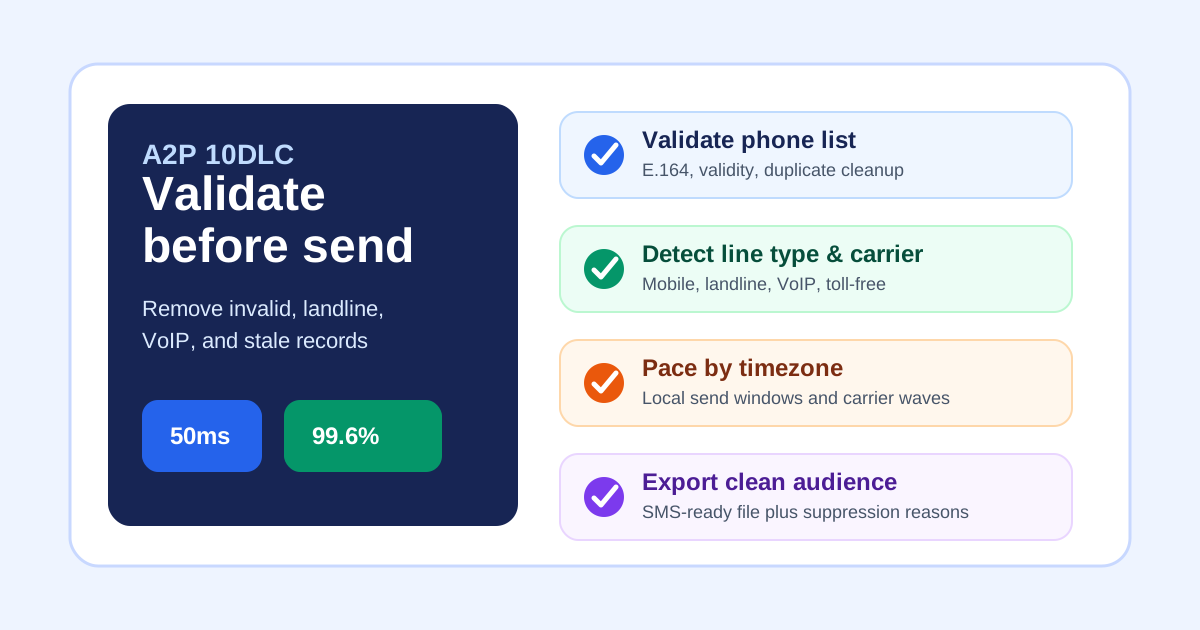
The 2026 Throughput Problem Is Really a List Quality Problem
A2P 10DLC throughput is shaped by brand trust, campaign type, carrier review, consent quality, and sending behavior. In 2026, MMS and SMS throughput discussions have become more operational because carriers keep tightening how traffic is evaluated. Twilio, for example, published a 2026 update tying increased MMS rate limits to Brand Trust Score and campaign use case. That is a useful signal for the market: carriers reward cleaner, more predictable traffic.
Phone validation does not replace registration. It makes the send file worthy of the throughput you have. A marketer with 500,000 contacts and a 12% bad-number rate is carrying 60,000 rows that can distort reporting, waste budget, and create unnecessary carrier noise. Add a 5% to 8% landline or VoIP mix, and the problem moves from list hygiene into deliverability operations.
Featured snippet answer:
To protect A2P 10DLC throughput, validate phone numbers before campaign upload, remove invalid and landline rows, detect VoIP and disposable numbers, enrich contacts with carrier and timezone data, then send only to reachable mobile contacts during local windows.
Why This Topic Deserves Its Own Playbook
Competitor research shows the market language is moving beyond basic phone parsing. Twilio talks about Line Type Intelligence, Line Status, and SMS pumping risk. Telesign positions phone number intelligence around risk signals and traffic patterns. AbstractAPI and similar providers package phone validation with carrier, location, and risk fields. The common thread is simple: buyers do not only want to know whether a number looks formatted correctly. They want to know whether that number should receive a paid message right now.
A 2026 A2P program needs that same decision layer. Carrier registration answers who you are and what your campaign claims to do. Phone validation answers whether each recipient belongs in the send at all. The two controls work together. A clean brand registration with a dirty recipient file still creates wasted volume, unclear delivery reporting, and weak evidence during compliance reviews.
For current carrier-policy context, Twilio published a 2026 MMS rate-limit update where limits are tied to brand trust and campaign use case. The exact limit model belongs to each provider, but the planning lesson is broader: messaging teams need cleaner audiences, more predictable pacing, and stronger evidence that their traffic matches the registered use case. Phone-check.app focuses on the recipient-quality side of that work.
Read the carrier rate-limit update used for market contextWhat to Remove Before SMS or MMS Sends
| Validation signal | Throughput risk | Action | Metric protected |
|---|---|---|---|
| Invalid or malformed number | Counts inflate before the carrier ever sees a reachable mobile recipient. | Remove before import and request a corrected number later. | Wasted send volume |
| Landline or toll-free | Messages fail or route poorly, then delivery reports blame the wrong team. | Suppress from SMS and send to voice, email, or CRM repair. | Delivery rate |
| Non-fixed VoIP | Fake signups, coupon abuse, and low-intent leads can enter paid sends. | Route to fraud review or block from automated campaigns. | Fraud exposure |
| Carrier concentration | One network receives a sudden spike that can look risky or poorly paced. | Create carrier-aware waves and monitor carrier-level failures. | Throughput pacing |
| Missing timezone | Recipients receive messages outside a sensible local window. | Hold the row, enrich it, or route it to a lower-risk channel. | Complaint risk |
The Validate, Enrich, Filter, and Export Workflow
Marketing teams often wait until a campaign underperforms to investigate phone quality. That is backward. The best time to catch bad numbers is before the file reaches your SMS platform, your carrier partner, or your finance report. Use the same workflow for one-off campaign lists, recurring lifecycle sends, and multi-file bulk uploads.
Validate
Marketing operations
Normalize numbers, remove invalid rows, and deduplicate campaign files.
Detect line type
RevOps
Separate mobile, fixed line, VoIP, toll-free, and unknown results before SMS upload.
Check carrier
Deliverability
Segment sends by carrier, track carrier-level failures, and spot unusual concentration.
Apply timezone
Lifecycle marketing
Send during local business hours and stagger high-volume batches.
Export evidence
Compliance
Save clean and suppressed files with validation date, result, and reason.
Campaign Readiness Checklist
A clean 10DLC send file is not just a CSV with fewer rows. It is a campaign asset with reasons, timestamps, and routing rules. Before a high-volume launch, marketing operations should be able to answer these questions without asking engineering for a database pull.
This checklist also prevents the classic post-campaign argument. If a launch misses target, the team can separate creative performance from contact quality. Delivery teams can inspect carrier-level results. Finance can see how many sends were prevented. Compliance can confirm that the audience matches the campaign purpose.
How to Validate a 10DLC Campaign List
- 1
Normalize every recipient number
Convert records to E.164 format before registration review, campaign imports, or MMS sends so duplicate local formats do not inflate list size.
- 2
Validate reachability and line type
Confirm validity, line type, and SMS eligibility. Suppress invalid numbers, landlines, toll-free lines, and risky VoIP rows before they touch your messaging platform.
- 3
Attach carrier and timezone data
Use carrier lookup and timezone enrichment to pace send waves by network and local hour instead of sending every eligible record at once.
- 4
Split clean sends from suppression exports
Export one SMS-ready file and one suppression file with reasons such as invalid, landline, VoIP review, no timezone, or duplicate.
- 5
Feed validation outcomes into compliance operations
Store validation age, line type, carrier, and suppression reason beside consent and campaign metadata so future audits explain why each record was included.
Implementation Example: Send Eligibility Gate
The API gate should return a campaign action, not just raw phone data. That makes the result usable by growth, RevOps, compliance, and engineering. A simple rule set can keep valid mobile contacts in the send queue, move landlines to a voice workflow, and route VoIP or unknown rows to review.
type PhoneCheckResult = {
  carrier?: string;
  country?: string;
  isDisposable?: boolean;
  number?: string;
  timezones?: string[];
  type?: 'FIXED_LINE_OR_MOBILE' | 'MOBILE' | 'FIXED_LINE' | 'VOIP' | 'TOLL_FREE';
  valid: boolean;
};

type CampaignDecision = {
  action: 'send_sms' | 'route_voice' | 'manual_review' | 'suppress';
  reason: string;
};

async function validateFor10DlcCampaign(phone: string): Promise<CampaignDecision> {
  const response = await fetch(
    `https://api.phone-check.app/v1-get-phone-details?phone=${encodeURIComponent(phone)}`,
    {
      headers: {
        accept: 'application/json',
        'x-api-key': process.env.PHONE_CHECK_API_KEY ?? '',
      },
    },
  );

  const result = (await response.json()) as PhoneCheckResult;

  if (!result.valid) {
    return { action: 'suppress', reason: 'invalid_or_disconnected' };
  }

  if (result.isDisposable || result.type === 'VOIP') {
    return { action: 'manual_review', reason: 'voip_or_disposable' };
  }

  if (result.type === 'FIXED_LINE' || result.type === 'TOLL_FREE') {
    return { action: 'route_voice', reason: 'not_sms_eligible' };
  }

  if (!result.timezones?.length) {
    return { action: 'manual_review', reason: 'missing_timezone' };
  }

  return { action: 'send_sms', reason: 'valid_mobile_contact' };
}
Scenario: Retail MMS Launch With a Stale CRM Segment
Picture a retail lifecycle team preparing an MMS launch for a seasonal sale. The audience comes from three sources: recent purchasers, loyalty members imported from a legacy system, and paid-lead contest entries. The raw audience looks impressive, but the sources behave differently. Purchasers usually have active mobile numbers. Loyalty imports often contain old landlines and disconnected records. Contest entries carry more VoIP and disposable numbers because the incentive attracted low-intent signups.
Without validation, all three groups enter the same upload. The MMS provider reports failures, but the marketer cannot tell whether the problem is creative size, carrier throttling, list age, or bad signup data. With validation, the team sends only to reachable mobile contacts, creates a separate re-permission workflow for stale loyalty numbers, and suppresses contest entries with disposable or VoIP signals. The same campaign now has cleaner measurement and a smaller bill.
This is why list validation belongs before campaign execution, not after. A2P 10DLC policy asks teams to run predictable, consented, use-case-aligned traffic. Phone validation gives the operations team the row-level control needed to make that promise real.
ROI: Throughput Waste Becomes Budget Waste
Throughput waste looks technical, but the bill is commercial. Suppose a retail team uploads 500,000 contacts for a launch campaign. If 12% are invalid, stale, or disconnected, 60,000 sends are gone before copy, segmentation, or offer quality can matter. If the team pays a blended $0.03 per message, that is $1,800 in direct waste for one campaign. Run that cadence twice a month and the annualized waste passes $43,000 before you count analytics confusion or SDR follow-up.
Now add landline removal, carrier-aware pacing, and timezone routing. A 40% reduction in wasted SMS spend is realistic when the original file contains bad status rows, desktop phones, and old imports. Delivery can move from the low 70% range toward the mid-90% range because the denominator finally represents reachable mobile contacts instead of every row in the CRM.
Bulk CSV cleanup
Upload multiple CSVs, validate at scale, and export a clean campaign file plus a suppression file.
Mobile-only sends
Keep SMS and MMS budgets focused on active mobile numbers instead of landlines or bad rows.
Cleaner reporting
Attribute failures to campaign strategy, carrier routing, or contact quality with fewer blind spots.
Where Phone-Check.app Fits
Phone-Check.app gives SMS teams a practical quality gate before A2P traffic reaches the carrier ecosystem. Use the real-time validator for signup and checkout forms, the bulk checker for campaign files, and the OpenAPI documentation for automated imports. The key is consistency: every source should produce the same campaign decision fields before the record enters SMS.
Operational rule
Do not send a 10DLC campaign to a raw CRM export. Validate the export, attach carrier and timezone data, remove non-SMS rows, then upload a clean audience with an auditable suppression reason for every removed contact.
FAQ
Does phone validation increase my A2P 10DLC trust score?
Phone validation does not register brands or guarantee a higher trust score. It improves the recipient side of the program by removing invalid, landline, VoIP, and suspicious rows that can hurt delivery quality, complaint rates, and campaign analytics.
Should MMS lists be cleaned differently than SMS lists?
The list hygiene workflow is the same, but MMS campaigns carry larger creative costs and often tighter throughput planning. Validate and segment before MMS sends so only reachable mobile contacts receive the campaign.
How often should an SMS marketing list be revalidated?
Revalidate before each major send, after large imports, and whenever a segment has not been contacted for 30 to 90 days. High-value OTP, order, and regulated workflows should validate at the point of entry.
Can bulk CSV validation support A2P compliance reviews?
Yes. Bulk validation gives marketing operations a clean recipient file, a suppression file, and a reason code for each removed number. That evidence helps explain audience quality, consent hygiene, and campaign readiness.