SMS Sender Reputation in 2026: How Phone Validation Protects 10DLC Deliverability
Sender reputation is not only about message copy or registration paperwork. Carriers also watch the quality of the traffic you send. If a campaign keeps hitting invalid numbers, landlines, risky VoIP ranges, or suspicious geography patterns, the sender starts to look careless even when the brand is registered.
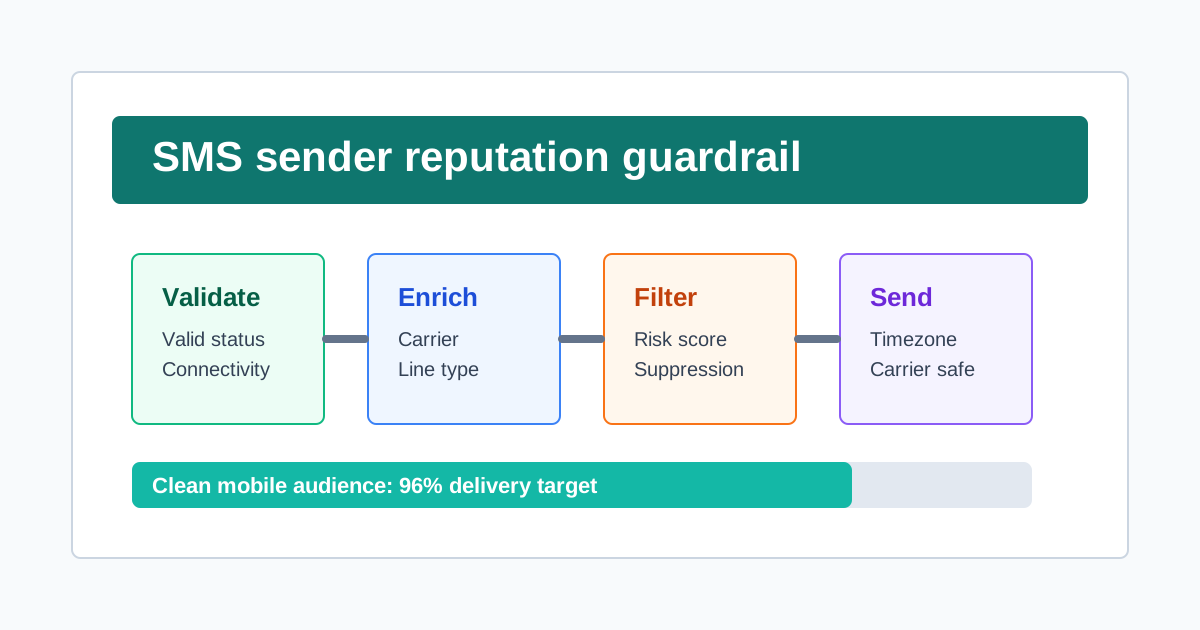
Delivery target for validated mobile audiences.
Budget waste reduction when non-mobile records are filtered.
Real-time lookup speed for pre-send checks.
What Is SMS Sender Reputation?
SMS sender reputation is the trust carriers and messaging providers place in your traffic. A strong sender sends expected messages to opted-in, reachable recipients. A weak sender shows patterns that look risky: high failure rates, sudden spikes, mismatched geography, poor opt-out handling, or repeated messages to numbers that should never have been in the audience.
2026 SMS compliance work is pushing teams toward cleaner proof. 10DLC registration, clear opt-in language, public terms and privacy links, and campaign-specific use cases are now routine. The next operational layer is recipient quality. If the list is dirty, the campaign inherits delivery risk before the first message goes out.
Phone-check.app gives marketing operations teams the data needed to act before damage happens: validity, carrier, line type, country, timezone, connectivity status, and risk scoring across 232 countries. The workflow is simple: validate, enrich, filter, schedule, and log.
Phone Data Signals That Protect Sender Reputation
| Phone Signal | Pre-send Rule | Reputation Impact |
|---|---|---|
| Invalid, void, or disconnected | Remove from SMS and suppress from the current campaign. | Lower hard failures and cleaner sender history. |
| Landline or fixed_line | Route to voice, email, or sales review instead of SMS. | Less spend on numbers that cannot receive mobile texts. |
| Mobile with known carrier | Allow if consent exists and campaign rules pass. | Higher delivery rate and more reliable attribution. |
| Non-fixed VoIP or high risk score | Review, rate limit, or block for OTP and promotional flows. | Lower SMS pumping exposure and fewer fake signups. |
| Timezone and geography | Schedule by local time and cap bursts by region. | Fewer quiet-hour mistakes and suspicious traffic spikes. |
The 2026 Pre-send Workflow
Pre-send validation
Run validation before every list import, automation enrollment, and one-time broadcast. The goal is to catch spend waste before the gateway bills for it.
Policy scoring
Convert phone data into a simple action: send, suppress, review, or route elsewhere. The scoring model should be readable by marketing, legal, and RevOps.
Timezone pacing
Use local time fields to spread sends across safe windows. This improves engagement and avoids traffic bursts that can trigger filtering.
Decision logging
Keep validation evidence with the campaign record. When a carrier, auditor, or executive asks what changed, the answer is in the log.
The workflow should run in two places. Use real-time checks on signup, order, demo, and lead forms so bad phone data never enters your systems. Use bulk validation before campaigns so old CRM data, event lists, and partner files get cleaned before spend starts. Teams that combine both approaches can move delivery failure rates from roughly 12% toward 1.8% and keep the remaining failures explainable.
interface PhoneCheckResult {
  valid: boolean;
  line_type: 'mobile' | 'landline' | 'fixed_voip' | 'non_fixed_voip' | 'toll_free';
  carrier?: string;
  timezone?: string;
  connectivity?: 'active' | 'disconnected' | 'void' | 'unknown';
  risk_score?: number;
}

function getSmsAction(result: PhoneCheckResult) {
  if (!result.valid || result.connectivity === 'disconnected' || result.connectivity === 'void') {
    return 'suppress_invalid';
  }

  if (result.line_type === 'landline' || result.line_type === 'toll_free') {
    return 'route_to_voice_or_email';
  }

  if (result.line_type === 'non_fixed_voip' || (result.risk_score ?? 0) >= 70) {
    return 'manual_review';
  }

  return 'send_sms';
}
Reduce wasted sends
If a 500,000-recipient list contains 18% landline, disconnected, or risky VoIP records, 90,000 sends create cost without reliable delivery. Filtering first turns that waste into a clean suppression file.
Stop suspicious routes
Non-fixed VoIP, premium-risk geographies, and repeated attempts can point to SMS pumping. A 50ms risk check lets you block or review before the OTP or promotion fires.
Send at local time
Timezone data helps B2C teams send when customers are awake and helps B2B teams avoid off-hours outreach. Better timing improves replies and keeps campaign behavior predictable.
How Carrier Lookup Improves Deliverability
Carrier lookup is not just a label on a contact record. It tells your team which network currently owns the number, whether the number has a mobile delivery path, and how to segment performance after the campaign. If one carrier starts returning more failures than usual, you can isolate that audience instead of blaming the entire campaign.
For RevOps, carrier data also improves attribution. A campaign that sends to validated mobile numbers on known carriers gives cleaner delivery, click, and conversion metrics. A campaign that mixes mobile, landline, VoIP, and disconnected records makes every downstream percentage less trustworthy.
That is why the best workflow does more than ask, "Is this phone number valid?" It asks: should this number receive SMS, when should it receive it, and what evidence supports that decision?
Real Campaign Scenario: B2B Webinar Follow-up
A B2B marketing team imports 38,000 webinar registrants from three event partners. The raw list looks healthy because every record has a phone value, but the first validation pass tells a different story: 2,900 invalid or disconnected numbers, 3,400 landlines, 1,100 non-fixed VoIP numbers, and 7,800 contacts outside the team's preferred local send window.
Without validation, the SMS follow-up would create thousands of failures and questionable sends on day one. With validation, the team sends the first message only to the mobile-ready segment, routes landlines to SDR call tasks, delays western timezones until the afternoon, and sends high-risk VoIP records to manual review. The total audience is smaller, but every metric becomes cleaner: delivery, replies, meetings booked, and cost per qualified conversation.
FAQ: Sender Reputation and Phone Validation
How does phone validation protect SMS sender reputation?
Phone validation removes invalid, disconnected, landline, and high-risk VoIP numbers before sending. That lowers hard failures, reduces suspicious traffic patterns, and helps carriers see a cleaner stream of messages from your 10DLC or toll-free sender.
What phone data should SMS teams check before sending?
Check validity, normalized format, line type, carrier, country, timezone, connectivity status, portability signals, and risk score. These fields support list hygiene, compliance controls, fraud prevention, and local send-time rules.
Can validation improve 10DLC deliverability?
Yes. Registration and consent still matter, but validated mobile audiences reduce avoidable delivery failures and suspicious spikes. Better list quality supports stronger carrier trust, cleaner analytics, and fewer wasted message attempts.
Should SMS campaigns block all VoIP numbers?
Not always. Fixed VoIP may be acceptable for voice follow-up or lower-risk workflows. Non-fixed VoIP, temporary numbers, and high-risk VoIP ranges should be suppressed from OTP and promotional SMS unless a manual policy approves them.
Build the Reputation Guardrail
Start with a simple policy: send SMS only to valid mobile numbers with consent, safe risk scores, and a local send window. Then expand the policy with carrier-specific reporting, bulk CSV cleaning, and form-level validation so bad data is removed at every entry point.
Protect Your Next SMS Send
Validate a sample list, compare suppressed records, and see how many landlines, invalid numbers, risky VoIP contacts, and off-timezone recipients are hiding in your next campaign.
Test a phone number