Phone-Verified Account Abuse in 2026: Stop PVA Farms Before OTP Spend Starts
Phone verification still creates trust. Attackers know that, so they rent numbers, buy phone-verified accounts, rotate VoIP providers, and push forms until an OTP lands. The fix is not more resend attempts. The fix is to validate the phone number, classify the line, score the carrier pattern, and decide whether the first OTP should be sent at all.
OTP sends to invalid numbers after the pre-check gate.
Fraud reduction target for layered phone risk controls.
Real-time validation before signup or checkout OTPs.
Countries covered for validation and enrichment.
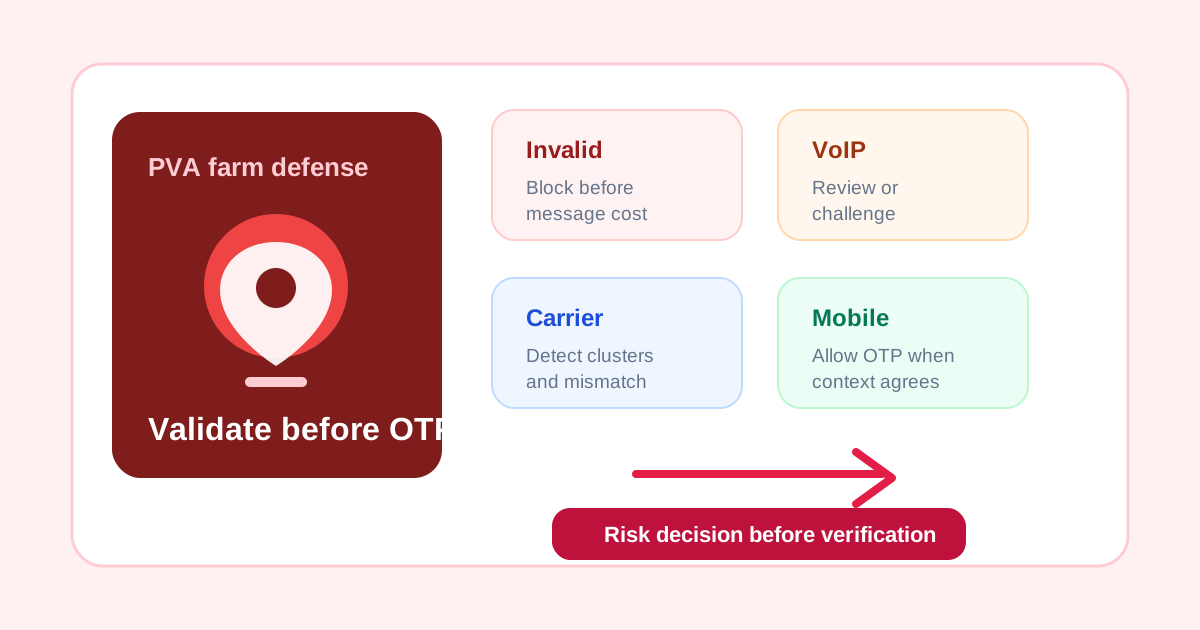
What PVA Farms Actually Exploit
A phone-verified account, often shortened to PVA, is an account that has passed SMS or voice verification. In a healthy signup flow, that means the user owns a reachable phone number. In an abuse flow, it may mean a rented virtual number, a cheap SIM cluster, a recycled phone identity, or a temporary number that exists just long enough to receive one code.
The search demand around PVA farms, VoIP detection, SMS pumping, and phone number risk assessment is rising because account creation is now automated across marketing forms, order forms, marketplaces, gaming products, and AI tools. A bad number is no longer just a data-quality issue. It can trigger messaging costs, promotion abuse, fake seller accounts, scraper access, and support queues full of accounts that should have failed at the first phone check.
Featured snippet answer:
Stop phone-verified account abuse by validating the number before OTP, detecting VoIP and disposable phone numbers, checking carrier and country data, applying velocity limits, and storing a risk reason for every blocked, challenged, or reviewed signup.
Why PVA Abuse Is Back in the Budget Conversation
Phone-verified account abuse is not new. Google researchers documented how attackers could use phone-verified accounts to make abuse look more trustworthy years ago. What changed for 2026 is the speed and surface area. AI-assisted signup scripts, rented inboxes, virtual phone services, and cheap automation mean one weak phone gate can be tested across hundreds of forms in minutes.
The cost is also broader than account cleanup. A fake account can trigger OTP spend, welcome campaigns, sales sequences, coupon credits, customer-success tasks, and fraud review. H-ISAC has also warned healthcare teams about SMS and voice one-time-password telephony fraud, which is a reminder that OTP abuse is a real operating expense in regulated and high-trust workflows. PVA farms exploit that same assumption: if the account passed a phone check, downstream teams often treat it as safer than it is.
Competitor keyword research points in the same direction. Search demand now clusters around phone number risk assessment, VoIP phone checker, SMS pumping prevention, disposable phone number detection, and phone intelligence API. Those are not separate problems. They are parts of one pre-verification decision: should this phone number be allowed to create trust, trigger spend, or enter the customer profile?
Line Type Risk Table for Signup Forms
| Number type | Signal | Abuse risk | Recommended action |
|---|---|---|---|
| Invalid or disconnected | Fails validity or line status check | Burns OTP sends and creates noisy signup analytics. | Block before OTP. |
| Landline or toll-free | Not suitable for automated SMS verification | Fails SMS delivery or forces expensive fallback paths. | Route to voice or support review. |
| Fixed VoIP | Business or residential VoIP provider | May be legitimate for B2B, weak for consumer identity proofing. | Allow, challenge, or review by segment. |
| Non-fixed VoIP | Virtual number not tied to a stable service address | Common in fake signup, resale, and abuse workflows. | Review or block from automated verification. |
| Disposable or burner | Temporary number pattern or provider | High likelihood of repeated account creation. | Block, log reason, and suppress future attempts. |
Marketing and Sales Damage From Fake Verified Accounts
Fraud teams usually see the abuse first, but marketing and sales pay for it too. A fake account with a rented number can enter lifecycle SMS, product onboarding, webinar reminders, SDR queues, or retargeting audiences. Each step looks small in isolation. Together, they create a data-quality tax that spreads across every team that trusts the CRM.
Lifecycle marketing
Invalid and disposable numbers lower delivery quality, inflate audience counts, and make engagement tests look weaker than they are. The campaign team spends time fixing copy when the real problem is contact eligibility.
Sales development
SDRs lose call slots to numbers that were never tied to a real buyer. A pre-check can route high-quality mobile leads to the dialer and move VoIP or disposable rows to enrichment first.
Customer profile quality
A verified phone field becomes a durable profile attribute. If that field came from a PVA farm, future personalization, risk scoring, and support workflows inherit the bad signal.
Finance and RevOps
OTP costs, SMS sends, enrichment runs, and sales activity all land in different budgets. A validation gate puts the prevention point before those costs fragment across teams.
The Pre-OTP Risk Gate
Most signup systems validate email immediately but wait to evaluate phone risk until after OTP delivery fails. That creates two problems. First, attackers can force resend loops and drain SMS budgets. Second, your fraud team receives accounts that already passed a visible trust step. The phone number should be scored before the OTP provider is called.
Validate the number before the first OTP
Normalize the phone number, confirm validity, and reject malformed or disconnected numbers before your OTP provider sends a message.
Detect line type and disposable signals
Separate mobile, landline, VoIP, toll-free, and disposable results. Treat non-fixed VoIP and disposable numbers as higher-risk account creation signals.
Attach carrier, country, and timezone
Use carrier and geographic data to catch suspicious routing, impossible signup timing, and clusters from high-risk networks.
Score the signup before resend loops begin
Combine phone intelligence with IP, device, email, velocity, and payment signals so risky signups enter review instead of repeated OTP attempts.
Store the decision reason
Write validation status, line type, carrier, risk reason, and decision to the customer profile so support, fraud, and RevOps teams can audit the outcome.
How Controls Work Together
Phone intelligence is strongest when it feeds a policy, not a single allow-or-block checkbox. For B2B lead validation, fixed VoIP might be acceptable if the domain, company, and intent look strong. For consumer promotions, non-fixed VoIP and disposable numbers may need a hard block. For order forms, premium-rate or international mismatch patterns should trigger risk review before any confirmation text is sent.
Implementation Example: Signup Risk Decision
The simplest useful implementation returns a decision and a reason. Your frontend can show a softer message, your fraud platform can store the raw signal, and your SMS provider only receives numbers that passed the pre-check. Keep the code strict and boring. A rushed fraud gate is where attackers find daylight.
type PhoneCheckResult = {
  carrier?: string;
  country?: string;
  isDisposable?: boolean;
  matchedCarriers?: string[];
  number?: string;
  timezones?: string[];
  type?: 'FIXED_LINE_OR_MOBILE' | 'MOBILE' | 'FIXED_LINE' | 'VOIP' | 'TOLL_FREE';
  valid: boolean;
};

type SignupDecision = {
  action: 'allow_otp' | 'step_up' | 'manual_review' | 'block';
  reason: string;
};

async function decideSignupPhoneRisk(phone: string): Promise<SignupDecision> {
  const response = await fetch(
    `https://api.phone-check.app/v1-get-phone-details?phone=${encodeURIComponent(phone)}`,
    {
      headers: {
        accept: 'application/json',
        'x-api-key': process.env.PHONE_CHECK_API_KEY ?? '',
      },
    },
  );

  const result = (await response.json()) as PhoneCheckResult;

  if (!result.valid) {
    return { action: 'block', reason: 'invalid_phone_number' };
  }

  if (result.isDisposable) {
    return { action: 'block', reason: 'disposable_phone_number' };
  }

  if (result.type === 'VOIP') {
    return { action: 'manual_review', reason: 'voip_phone_number' };
  }

  if (result.type === 'FIXED_LINE' || result.type === 'TOLL_FREE') {
    return { action: 'step_up', reason: 'not_mobile_sms_line' };
  }

  if (!result.carrier || !result.timezones?.length) {
    return { action: 'manual_review', reason: 'missing_enrichment_data' };
  }

  return { action: 'allow_otp', reason: 'valid_mobile_phone' };
}
Bulk Cleanup for Accounts That Already Verified
Real products rarely start with a perfect gate. Most teams discover PVA abuse after months of signups, imports, and campaign sends. That is where bulk validation matters. Export users created during suspicious periods, validate every phone number, then segment the results into action buckets: confirmed mobile, fixed-line review, VoIP review, disposable block, invalid removal, and country or carrier mismatch.
Do not delete the user record just because the phone number is weak. Store the validation result and suppress the number from SMS, OTP, and sales workflows until the account provides a better contact method. That preserves auditability while keeping bad phone data from creating new costs.
Bulk remediation workflow:
Upload suspect account exports, validate in bulk, download enriched results, remove invalid and disposable numbers from messaging, route VoIP clusters to fraud review, and update CRM fields with the reason and validation date.
Real-World Scenarios
SaaS signup abuse
Attackers rotate virtual numbers to create accounts for scraping, spam, or promotion abuse. Validate, detect VoIP, and challenge before the first workspace is created.
E-commerce order forms
Fraud rings submit wrong or high-risk numbers to hide identity and trigger SMS confirmation costs. Use phone risk decisions before order confirmation messages fire.
B2B lead validation
Paid leads with non-fixed VoIP or disposable numbers waste SDR time. Route strong mobile leads to sales and move questionable numbers to enrichment or email nurture.
Where Phone-Check.app Fits
Phone-Check.app gives product, growth, and fraud teams the phone intelligence needed before an OTP, SMS campaign, or sales workflow starts. Use the real-time validator for signup and checkout gates, the OpenAPI documentation for server-side implementation, and bulk validation for cleaning imported lead, user, or customer files.
Practical rule
Send OTP only after a number is valid, suitable for the channel, and consistent with the signup context. Everything else should be blocked, challenged, or reviewed before it can create cost.
FAQ
What is phone-verified account abuse?
Phone-verified account abuse happens when attackers use rented, virtual, disposable, or farmed phone numbers to pass SMS or voice verification and create accounts that look legitimate enough to spam, scrape, resell access, abuse promotions, or trigger OTP costs.
Can phone validation stop every PVA farm?
No single signal stops every farm. Phone validation reduces the easy paths by removing invalid numbers, flagging VoIP and disposable patterns, detecting carrier and country mismatches, and feeding risk reasons into velocity and device controls.
Should all VoIP numbers be blocked from signup?
Not always. B2B products may accept some fixed VoIP numbers for manual review or sales follow-up. Non-fixed VoIP, disposable numbers, and high-velocity signup clusters usually deserve a stricter challenge or block.
How does this reduce OTP and SMS pumping costs?
The validation gate runs before the first OTP send. Invalid, landline, toll-free, disposable, and high-risk VoIP numbers can be suppressed or reviewed, which prevents resend loops and stops paid messages from going to numbers that should never verify.