OTP Spend Guardrails: Pre-Send Phone Validation for SMS and Voice Verification in 2026
OTP cost control now belongs in the verification flow, not the finance spreadsheet after a bad week. Before you ask Twilio, Sinch, Bird, Plivo, or another provider to send a code, validate the phone number, classify the line type, detect VoIP and disposable patterns, and decide whether that attempt deserves telecom spend.
Average validation response for pre-send checks
Phone validation accuracy across 232 countries
Potential SMS waste reduction with clean send rules
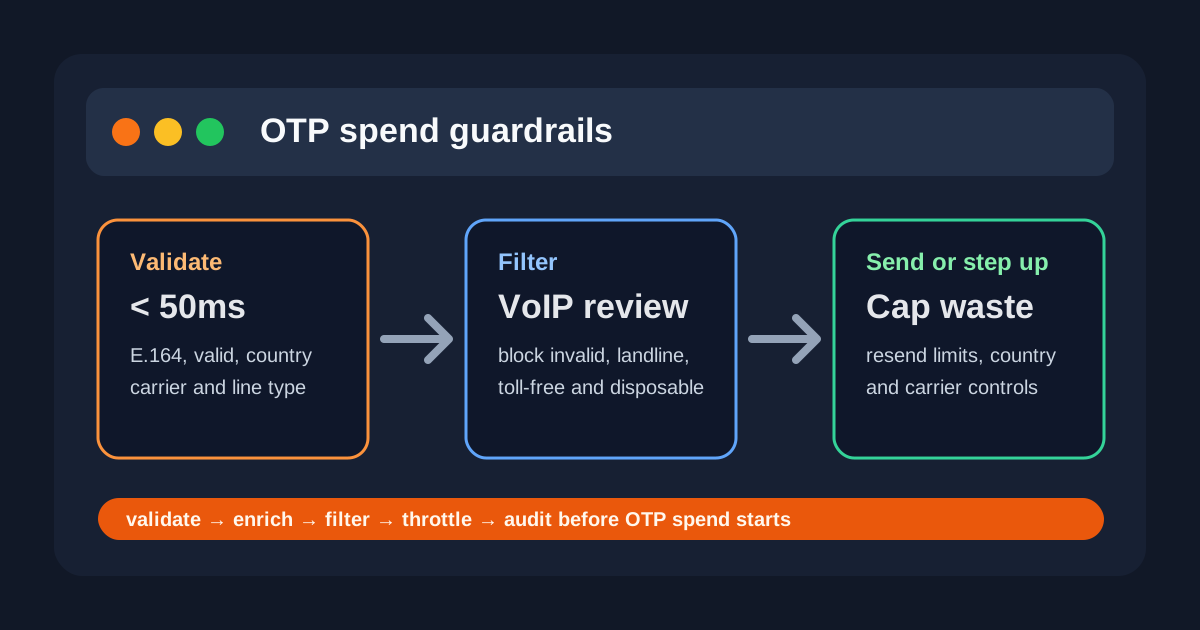
Why OTP Spend Is a 2026 Growth Problem
Growth teams used to treat verification codes as a background utility. A user enters a number, the product sends a code, and the authentication provider absorbs the complexity. That model breaks when attackers trigger thousands of messages, users mistype numbers during checkout, or a signup form accepts disposable VoIP lines that never become real accounts.
Recent fraud guidance from healthcare and identity teams points to the same pattern: OTP abuse concentrates around signup, password reset, device enrollment, and patient or customer portals. The expensive part is not one invalid number. It is the retry loop. A bad number receives repeated SMS or voice attempts, the user or attacker keeps pressing resend, and your messaging bill climbs before a single qualified user is created.
A phone validation API changes the sequence. Instead of sending first and analyzing later, you run a fast phone number validity check before the OTP call. Phone-Check.app returns normalized number, validity, country, carrier, line type, disposable status, geo, and timezone data. That gives product, security, and marketing operations a shared decision point: send, step up, delay, or suppress.
OTP Decision Table for SMS, Voice, and Review
| Phone signal | Recommended action | Why it matters | Spend effect |
|---|---|---|---|
| Valid mobile number | Send OTP | The number is formatted, reachable enough for the selected channel, and eligible for mobile messaging. | Keep conversion path fast |
| Invalid or malformed number | Block before provider call | No reliable recipient exists. Sending a code only creates a failed charge and a poor user experience. | Remove direct waste |
| Landline or toll-free line type | Use alternate verification | The number is not a good SMS target and can create retry loops when users keep requesting codes. | Prevent repeat failures |
| Non-fixed VoIP or disposable number | Review, step up, or delay | Higher fake-account and pumping risk. A slower route protects spend without blocking every edge case. | Reduce attack leverage |
| Country, carrier, or prefix spike | Throttle by segment | Fraud often concentrates by destination pattern, even when individual sessions look normal. | Cap sudden burn |
How to Build the Validate, Enrich, Filter, Send Workflow
The cleanest OTP architecture is a small policy layer between your form submit endpoint and your messaging provider. The policy layer does five jobs: normalize, validate, enrich, filter, and log. It should run for signup, login, password reset, order confirmation, high-value coupon redemption, and any flow where a bot can generate telecom charges.
1. Validate before every provider call
Use client-side formatting to reduce user mistakes, but make the spend decision on your server. Server-side validation keeps the rule enforceable, lets you rotate API keys safely, and prevents attackers from bypassing checks by calling internal endpoints directly.
2. Enrich the request with carrier and timezone data
Carrier lookup helps identify destination patterns that fail more often or cluster during attacks. Timezone data protects user experience: a password reset may be urgent, but a marketing verification tied to a promo signup can respect local quiet hours. Country and geo fields also give finance a clean way to report spend by destination instead of by provider invoice line item.
3. Filter high-risk line types before SMS spend
Valid does not always mean eligible. Landline, toll-free, disposable, and non-fixed VoIP numbers should not receive the same treatment as verified mobile lines. For low-risk products, you may show a correction prompt. For fintech, healthcare, marketplaces, and paid acquisition funnels, you may require a stronger verification method or manual review.
Node.js Pre-Send OTP Guardrail
type PhoneDetails = {
  valid: boolean;
  number?: string;
  country?: string;
  carrier?: string;
  type?: string;
  isDisposable?: boolean;
  timezones?: string[];
};

type OtpDecision = 'send_sms' | 'step_up' | 'block';

async function getPhoneDetails(phone: string): Promise<PhoneDetails> {
  const url = new URL('https://api.phone-check.app/v1-get-phone-details');
  url.searchParams.set('phone', phone);

  const response = await fetch(url, {
    headers: { 'x-api-key': process.env.phoneCheckApiKey ?? '' },
  });

  if (!response.ok) {
    throw new Error('Phone validation failed before OTP send');
  }

  return (await response.json()) as PhoneDetails;
}

function decideOtpRoute(details: PhoneDetails): OtpDecision {
  const lineType = details.type?.toLowerCase() ?? 'unknown';

  if (!details.valid || lineType === 'landline' || lineType === 'toll_free') {
    return 'block';
  }

  if (details.isDisposable || lineType.includes('voip')) {
    return 'step_up';
  }

  return 'send_sms';
}
ROI Model: Stop Paying for Verification Attempts That Cannot Convert
A practical OTP ROI model starts with attempted sends, not delivered sends. Suppose a signup funnel generates 500,000 verification attempts per month. If 8% are invalid, landline, disposable, or non-fixed VoIP numbers, 40,000 provider calls are poor candidates before delivery is even measured. At $0.008 per SMS attempt, that is $320 of direct waste each month. Add voice OTP, premium destinations, retries, support tickets, and fake-account review, and the hidden cost grows quickly.
The bigger return comes from reducing attack leverage. A basic resend button lets one bad number become five provider calls. A guardrail collapses that multiplier by blocking known-bad numbers, delaying suspicious patterns, and capping attempts by phone, country, carrier, session, IP range, and account. That is why phone validation should sit next to rate limiting, CAPTCHA, device fingerprinting, and country controls.
Mobile-first sends
Reserve instant SMS for valid mobile lines and route landline or toll-free entries to correction flows.
VoIP review
Treat non-fixed VoIP, disposable, and unknown line types as review candidates instead of automatic sends.
Resend pacing
Use carrier, country, and timezone fields to set retry caps that match risk and user expectations.
Operational Metrics to Track After Launch
Good guardrails are measurable. Track OTP attempts by endpoint, country, carrier, line type, and decision outcome. Separate user correction prompts from hard blocks. Watch the ratio of OTP sent to account activated, OTP sent to order completed, and OTP sent to password reset success. If a carrier or country shows a sudden spike in blocked attempts, review it before raising limits.
Marketing and growth teams should also monitor list quality upstream. Paid lead forms, affiliate traffic, coupon capture pages, and checkout flows should feed the same validation fields into your CRM. That way, the phone intelligence used to protect OTP spend also improves campaign segmentation and future outreach quality.
How to Add the Guardrail
- 1
Normalize the phone number before the OTP request
Convert the submitted phone number to E.164 and reject malformed values before any SMS or voice provider call is attempted.
- 2
Run real-time validation and enrichment
Call Phone-Check.app to collect validity, line type, carrier, disposable status, country, geo, and timezone data in the verification flow.
- 3
Apply a spend decision before sending
Allow valid mobile numbers, review VoIP or disposable numbers, block invalid and unsupported line types, and route risky traffic to a lower-cost challenge.
- 4
Throttle resends by number, country, and session
Use cooldowns and caps so repeated OTP requests cannot multiply carrier fees or hide pumping behavior behind a single signup attempt.
- 5
Log rejected and reviewed attempts
Store the decision reason, carrier, country, endpoint, and timestamp so finance, security, and growth teams can audit waste and tune thresholds.
Make Phone Intelligence the First Verification Control
Phone-Check.app gives product and security teams a fast pre-send decision layer: validate the number, detect line type, check carrier, identify timezone, and filter invalid, disposable, VoIP, landline, or toll-free numbers before OTP spend starts.
FAQ
What is an OTP spend guardrail?
An OTP spend guardrail is a pre-send rule that decides whether a verification request should receive SMS, voice OTP, a slower review path, or no message at all. It uses phone validation, line type, carrier, country, and resend behavior before telecom spend starts.
Should every VoIP number be blocked from OTP verification?
No. Fixed VoIP may be legitimate for some B2B accounts, while non-fixed VoIP and disposable numbers deserve stricter review. The right rule depends on your product risk, account value, and whether the request is signup, password reset, or device enrollment.
How does phone validation reduce SMS pumping risk?
Phone validation blocks invalid, landline, toll-free, disposable, and suspicious VoIP numbers before the SMS provider call. It also adds carrier, country, and timezone fields that help rate limits catch abnormal clusters.
Where should OTP validation run?
Run it on the server immediately before the SMS or voice provider call. Client-side formatting can improve form quality, but spend decisions must happen server-side so attackers cannot skip the guardrail.